It seems other worldly from the start. Wild bison littered across rugged prairies, staking their claim to the foothills of the majestic Rocky Mountains, framed by vast, brooding skies. It’s a prelude to what will soon feel like another universe.
We’re on our way to the front line of America’s nuclear deterrence. We’ve been granted rare access to see inside a bunker that has the capability to launch nuclear war. We cross into Wyoming, to the outskirts of Cheyenne city.
At the gates to F E Warren, there’s a static display of the country’s nuclear might with the empty shell of a Minuteman III missile, one of 400 in America’s intercontinental ballistic missile arsenal. But the rest are stored in underground silos and security is intensely tight. We have to handover our cameras and use the ones they’ve supplied. They can’t afford to risk any kind of electronic interference.
Once kitted up, we make our way along Interstate 8 to Nebraska. We’re accompanied by missileers. If President Trump orders a nuclear strike, these are the men and women who will have to respond. They have the capacity to launch nuclear warheads within minutes. I’m struck by how young they are, some in their twenties, with the fate of the world in their fingertips.

The bunker is located on the outskirts of Cheyenne, near Nebraska
As we arrive at an innocuous looking Missile Alert Facility, we’re told we’re about to head more than 70 feet underground to the nuclear command centre. We pass through their supremely tidy living quarters. There is a pool table, a workout room and television. They will spend days away from their families here, working in pairs, diligently preparing for something that will likely never happen.
Every move we make is supervised with rigorous detail. But this is a surreal, ominous mission that perhaps encourages some dark humour. At the gates to the lift that will take us down, there’s a giant mural of Mario Super, the cartoon plumber from the video game. At the bottom, he stands next to a mushroom cloud. As the 8 ton doors open, we see our first slice of a cold war feat of engineering.
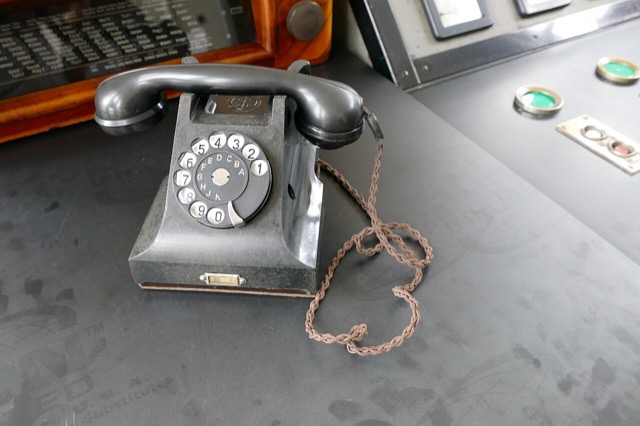
First Lieutenant Paul Crowley and Second Lieutenant Anna Victoria Bryant greet us at the door: “Welcome to our home from home.” Their “home” is tiny, barely room for more than four of us to stand. The capsule was built in the 1960s and much of the equipment has been updated, not replaced.

You actually have to turn a switch – not press a button – to launch the weapons
Officer Crowley tells me they are responsible for 10 nuclear warheads a day. “It’s an enormous amount of power but we take it seriously.” They are going through their drills – they’re responsible for security and maintenance. Every 10 or so minutes, a buzzer sounds and we’re asked to leave. We’re told there are security details we can’t be privy to. Outside is an exercise bike – they have downtime here, but they always need to be alert.






Leave a reply