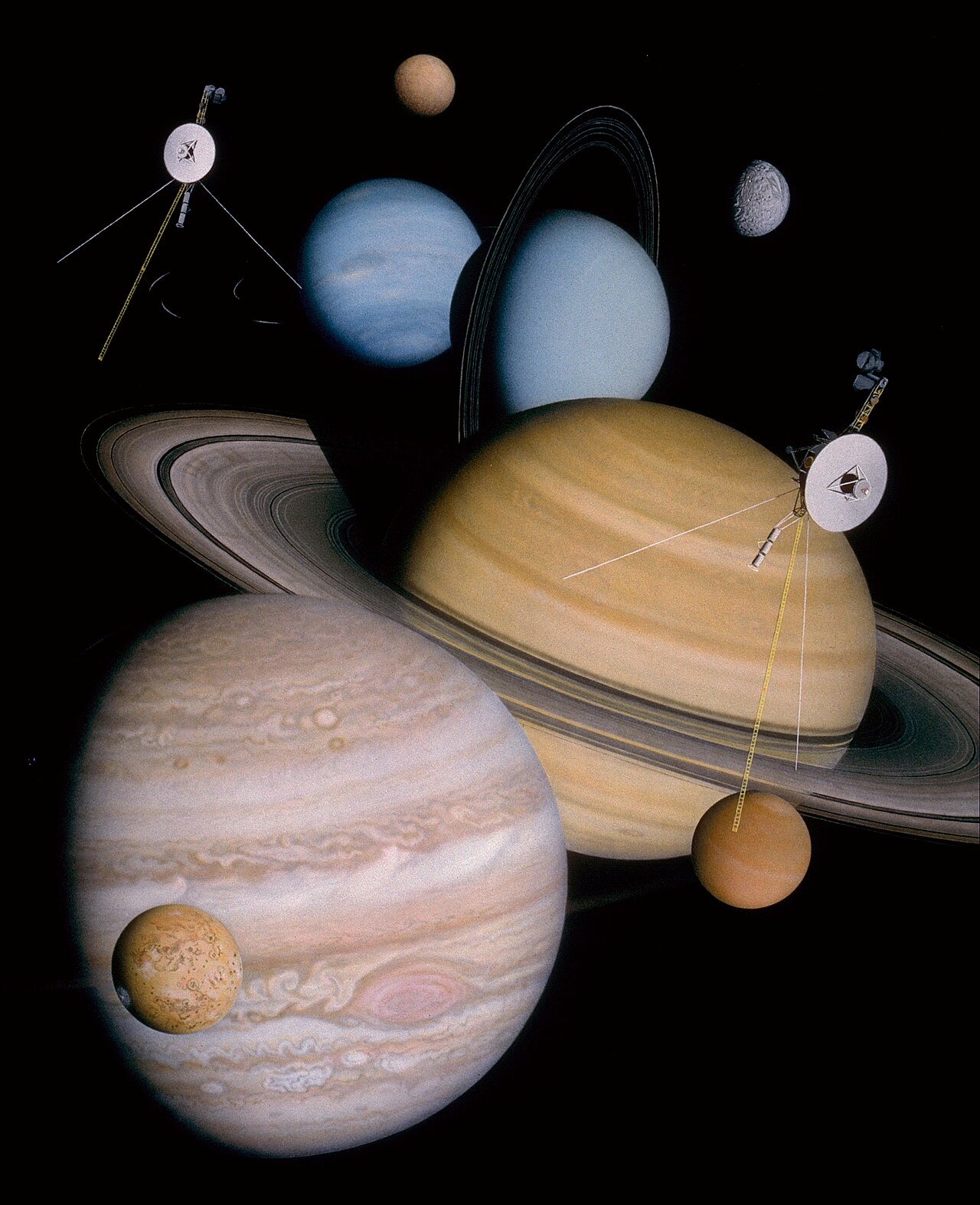
Nearly half a century after it left Earth, NASA's Voyager 1 has passed another historic marker. At 10:16 GMT on 18 November 2026, the spacecraft reached a distance of one light-day from Earth, so far away that its radio signals, travelling at the speed of light, now take a full day to reach us.
How far is one light-day?
One light-day is the distance light travels in 24 hours: about 25.9 billion kilometres, or 16.1 billion miles.
No other spacecraft has ever been that far away. Voyager 1 has been the most distant human-made object since 1998, when it overtook the older Pioneer 10 probe. It is moving at about 61,000 km/h, and NASA says a command sent from Earth now takes 24 hours to reach the spacecraft, with another 24 hours for any reply to come back.
A journey that began in 1977
Voyager 1 and its twin, Voyager 2, were launched in 1977 to take advantage of a rare line-up of the outer planets. Voyager 1 flew past Jupiter and Saturn, then kept going. In 2012 it became the first spacecraft to enter interstellar space, the region beyond the bubble of solar wind that surrounds our Sun. Voyager 2 followed in 2018. Both still carry the famous Golden Record, a message from Earth for anyone who might find it.
NASA marked the milestone with a public event called "Shine Bright for Voyager's Light-Day" on 17 November, inviting people around the world to flash a light at the sky. Dave Gallagher, director of NASA's Jet Propulsion Laboratory, called it "yet another historic feat on an extraordinary voyage of discovery."
A pause in the data
The celebration came with a twist. Since 14 November, Voyager 1 has not been sending back its science and engineering data, although the team is still receiving a strong carrier signal from the spacecraft. Project manager Suzanne Dodd told Space.com that the team had seen this kind of problem before and was confident the data would return. Live Science reported that the likely cause is one of the onboard computers. A similar fault in November 2023 stopped science data until engineers fixed it in 2024.
A power supply running down
Each Voyager is powered by a generator that turns heat from decaying plutonium into electricity, and both lose about 4 watts of power a year. Earlier in 2026 engineers switched off some equipment and swapped in lower-power alternatives. NASA says that should let both probes keep their current instruments running until at least their 50th launch anniversaries in 2027. Even after it falls silent, Voyager 1 will keep drifting outward, still the most distant object humans have ever made.
Sources
- NASA: Voyager 1 makes history reaching one light-day from Earth (19 November 2026)
- Space.com: Voyager 1 team, unbowed by communications glitch, celebrates light-day milestone
- Live Science: Voyager 1 stops sending science data ahead of its light-day milestone
- CNN: NASA's Voyager 1 is now one light-day away from Earth (18 November 2026)
- EarthSky: Voyager 1 reaches 1 light-day from Earth











Leave a reply