
DAN COUGHLIN
Special to The Plain Dealer
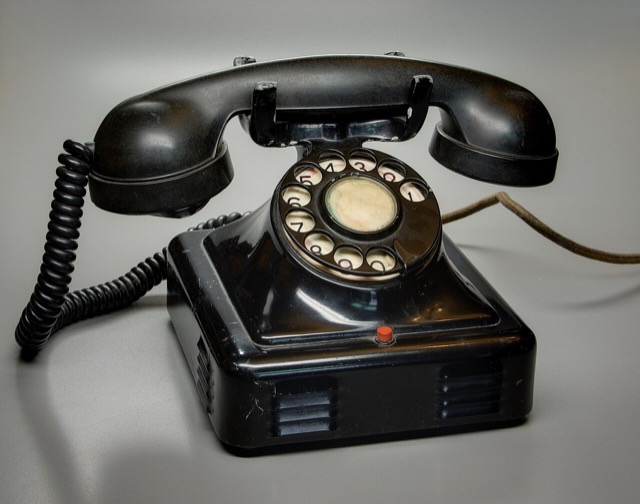
CLEVELAND, Ohio — Hal Lebovitz’s brain was virtually exploding with plans when he succeeded retiring Plain Dealer Sports Editor Gordon Cobbledick in December, 1964. His first move was to hire a dwarf to answer the phones. We rejoiced because our phones rang continuously.
Readers called us with tips and story suggestions that often paid off. For example, when high school basketball star Lee Walczuk transferred in mid-season from Gilmour Academy to St. Edward, his father called to tip us off. He could have called the Cleveland Press, but he didn’t.
There was a downside, however. Gamblers, bookies, horseplayers and drunks in bars were regular callers. They needed scores, they needed race results, they needed arguments settled. It was almost impossible to write a story without interruptions. We needed a call screener.
Into our lives stepped an amazing little man named Dennis Lustig.
“He doesn’t know anything about newspapers, but he does know sports,” Lebovitz told us. “He’ll handle the phones.”
Hal took Executive Sports Editor Milt Ellis aside and alerted him that Dennis was short.
“How short is he?” Ellis asked.
“Very short,” said Hal.
Lustig was 20 years old and just two years out of Shaker Heights High School. One night after lingering too long next door at the Headliner Bar, several of us stretched out the little man on the sports copy desk and measured him with a printer’s ruler. He was 44 inches tall, not even 4 feet tall.
One would have thought that Ellis would have been pleased, even euphoric, because Ellis, who was barely over 5 feet tall, was no longer the shortest man at The Plain Dealer. But, no, Ellis was averse to change. Lustig started work on a Monday. Ellis took the pension on Tuesday.
A problem immediately became apparent and Lebovitz’s grand plan was scuttled. Each desk in the sports department had an old wooden phone box connected to 10 lines. Lustig could not reach any of them. It was quite a predicament. His arms were too short to answer the phones and his legs were too short to run for coffee. Here’s how the problem was solved. They made a reporter out of him.
Lustig reveled in the life of a sportswriter. In 1967, he used his vacation to travel with me to a Browns playoff game in Dallas. While waiting to cross a street, a big lunk of a Texan in cowboy boots and a 10-gallon hat peered down and asked, “Are you with the circus?”
“No,” said Lustig. “I’m with the greatest show in football. The Cleveland Browns.”
Nobody ever forgot Dennis Lustig. I was talking to Pete Rose in the dugout before a game in Philadelphia. “Say hello to Dennis for me,” said Pete. I was interviewing Hank Aaron. “How’s Dennis doing?” Hank asked.
Lustig developed a nostalgia series called “Where Are They Now?” in which he reflected on the careers of retired athletes. In one story about an old Indians’ player, he referred to the player’s 1941 manager, as “the late” Roger Peckinpaugh.
The next day Lustig got a phone call. “This is the late Roger Peckinpaugh,” said Peckinpaugh, who was very much alive and lived in Shaker Heights. He read The Plain Dealer every day.
A few years later Peckinpaugh did die. “I had that story five years ago,” said Lustig.
He knew he had a 40-year life span. His heart stopped on Nov. 25, 1984, right on schedule. Every year on that date some of his chums leave a six-pack of Bud Light on his grave — five empties and one unopened.
* * *
Junior O’Malley’s vice was the race track. He loved horses. He also loved VO on the rocks and his wife Didie. Don’t ask me to put them in order.
O’Malley was a printer at The Plain Dealer, usually a proof reader, a well-paid union job, but this was only his winter job. When Thistledown Racetrack opened every spring, O’Malley took a leave of absence from the newspaper composing room to work as a mutuel clerk at the race track, which paid only half as much.
My luck changed, not necessarily for the better, when he took me to Thistledown for the first time. This was in the mid-60s. He marked my program. He checked off a horse in every race.
“These are the horses to bet,” he said.
Not only did he not pick a winner, but none of his selections even finished in the money, neither second nor third.
“That’s incredible. Do you realize how hard that is?” O’Malley said.
Frankly, I don’t think it’s that hard at all. I do it all the time. O’Malley, however, fancied himself quite the judge of horse flesh. He didn’t pick his spots. He never said, “This race is impossible to handicap.” No, what he said was, “There’s a winner in every race and I’m gonna find it.”
During the 1960s and ’70s I spent many hours mentally cataloging O’Malley’s life story, just in case it became useful. It just did. His love affair with horses began on the day of his christening in 1915. His father borrowed the milkman’s white horse to pull the wagon in which he and his mother, Ruby, rode to St. Rose’s Church on Cleveland’s west side for the baptism. At the apex of a sustained drinking bout the night before, O’Malley’s father and his cronies decided that a white horse was not appropriate for the first born son of an Irish family.
So they painted the horse green.
Erasing the stain of original sin from the soul of James Francis Aloysius O’Malley, Jr. was easier than removing the paint from the hide of Old Dobbin.
“I was told that when they hit the poor beast with turpentine he took off running down Detroit Avenue and covered the distance from W. 115th to W. 110th in 32 and one-fifth seconds, still a record for two furlongs on Detroit Ave.,” he said.
From the day he was embraced by Holy Mother Church, his life became theologically complicated. He was in the eighth grade at St. Rose’s elementary school when Sister Gilbert caught him reading the Daily Racing Form instead of the Baltimore Catechism.
“She took me right up the chain of command. She took me to the principal, Sister Agnes, and she took me to the pastor, Father O’Connell. He asked me what the Racing Form was. I said, ‘See Father, take this horse. He was fifth at the quarter and third at the half.’ Just then he hauled off and smacked me right in the kisser. Your uncle, Frank Coughlin, who was next in line on another rap, went running down the hall screaming, ‘It’s a curse to get hit by a priest!’ Horses have been getting even with me ever since,” O’Malley concluded.








Leave a reply