Remember the soft clunk of a video tape in a VCR?
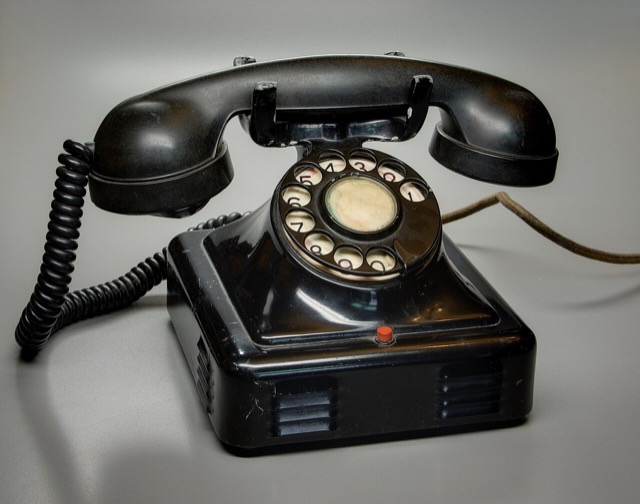
The click-clack of a typewriter. The zip-ticka-ticka-ticka-tick of a rotary telephone. The soft clunk of a VHS tape inserted into a VCR. If you were born after 1990, chances are you’ve never heard these sounds, though they once provided the sonic landscape of our lives.
The Museum of Endangered Sounds wants to change that. Its free online exhibits feature all of the above — plus a dozen more sounds that we no longer hear in our everyday lives.
“Imagine a world where we never again hear the symphonic startup of a Windows 95 machine,” writes the museum’s curator, Brendan Chilcutt, who sports oversized cat-eye glasses and an unfashionable bowl haircut. “Imagine generations of children unacquainted with the chattering of angels lodged deep within the recesses of an old cathode ray tube TV.”
The first thing you need to know about Brendan Chilcutt is that he doesn’t exist. He’s the creation of three former advertising students who launched the museum in 2012 while attending the University of Chattanooga. They realized one day that technology was getting quieter: If you’re polite, using an iPhone doesn’t make any sound at all. In that sea of silence, curators felt people were losing something — an appreciation for the sounds that once made the world work.
Much has been made of the internet’s “post-late-90s bias” — many of the books, articles and films from earlier periods have never been digitized, so people are unaware they ever existed. The same is true of sound. The museum’s curators are among a handful of hobbyists working to prevent the sounds of the past from being lost forever.
Los Angeles journalist Gordon Skene has been fishing audio tapes and records out of dumpsters at radio stations for decades, restoring them, and posting them on his non-profit site PastDaily. Gordon is concerned with teaching people about history. Each year on Dec. 7 for example, he posts news radio coverage that followed the Japanese attack on Pearl Harbor in 1941.
“Compare how people felt during 9/11, and listen to the broadcasts of December 7, 1941 — that feeling of not knowing what was going to happen next — it’s pretty much the same,” he says. “We all know how we felt during 9/11 but hardly any of us were around in 1941. So it winds up being a shared experience.”
It’s not just a history lesson, however. Gordon says hearing the old recordings can give us a sense a sense of the cyclical nature of politics, war and life itself.
“I guess maybe in its most basic sense it’s proving that shit works out, no matter what you think at the time,” he says.
Gordon also posts less earth-shattering recordings. That includes a lot of music. Want to know what it was like to be at a Smiths show at their peak in the mid-80s? Want to listen to a full concert that’s never been released on Spotify (or even on CD)? The music and mundane news events of the past give us a real sense of what life was like back then in a way that looking at photos can’t.
For example, Gordon referred me to a recording which musicologist Mylène Pardoen created with 3D artists. It’s a 360-degree soundscape that lets you hear what it was like to walk down the street in 18th-century France. As Boing Boing reports, it consists of “the hum of flies drawn to the fishmongers’ stalls, the sound of the loom at the woolen mill that used to stand at one end of the Pont au Change … all overlaid with the incessant cries of the seagulls that came to feed on the city’s heaps of waste.” You can listen to it here.








Leave a reply